Maternity and paternity leave in Switzerland: duration, allowance, protection against dismissal and return to work in 2026
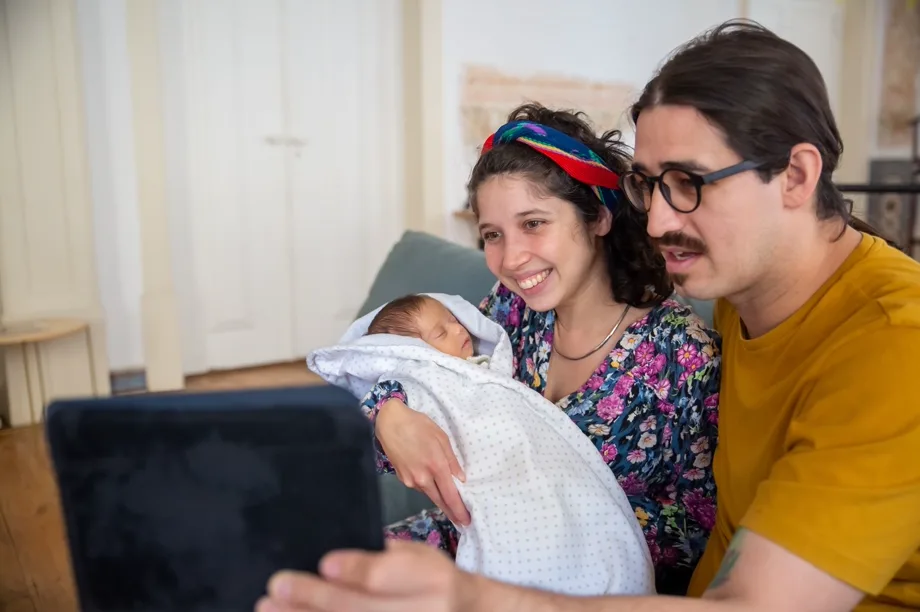
Switzerland recorded 78,200 births in 2025 (FSO, 18 June 2026) and, the same year, 129,500 people received a loss-of-earnings allowance linked to parenthood, for a total of CHF 1,147 million (FSIO, 27 October 2026). Yet one eligible parent in four does not take the other parent’s leave, and one mother in fourteen does not take her maternity leave. Often for lack of information: who is entitled to what, how much the allowance pays, from when the employer can no longer dismiss, what happens if the baby is hospitalised, how to take your two weeks as a father or as the mother’s wife. The rules are spread across the Loss of Earnings Compensation Act (LAPG/EOG), the Code of Obligations (CO), the Labour Act (LTr/ArG) and, in Geneva, a cantonal insurance scheme.
This guide follows the real timeline: pregnancy at work, maternity leave and its allowance with a worked example, the other parent’s leave, the return to work, then what changes in 2027 and in the cantons. Every rule refers to the article of law, the FSIO page or the SECO brochure. If your employer dismissed you during pregnancy, also read our guide on sickness and accident during employment, which explains the nullity and suspension mechanism of Article 336c CO.
Maternity and paternity leave in Switzerland: the figures
Before the details, the useful benchmarks, with their source and date.
| Indicator | Value | Source |
|---|---|---|
| Births | 78,200 live births in 2025 (−0.1% in one year); average age of mothers 32.5; 1.28 children per woman | FSO, 18 June 2026 |
| Recipients of a parenthood allowance | 129,500 people in 2025, for CHF 1,147 million; in 2024, 65,054 maternity allowances and 62,560 allowances to the other parent | FSIO, 27 October 2026; pocket statistics 2026 |
| Take-up rate | Maternity leave taken by 93% of eligible mothers, other parent’s leave by 75% of eligible parents (2024 births) | FSIO, 27 October 2026 |
| Average allowance | CHF 143 per day for maternity, CHF 182 for the other parent, CHF 152 for caring for a sick child (2024) | FSIO, pocket statistics 2026 |
| Maternity leave | At least 14 weeks after the birth, i.e. 98 daily allowances at 80% of income, capped at CHF 220 per day (cap reached from CHF 8,250 per month) | Art. 329f CO; art. 16c, 16e and 16f LAPG; FSIO |
| Other parent’s leave (paternity) | 2 weeks within six months of the birth, i.e. 14 daily allowances at 80%, capped at CHF 3,080 in total | Art. 329g CO; art. 16j and 16k LAPG; FSIO |
| Insurance conditions | Insured under the AVS/AHV for the 9 months before the birth, 5 months of gainful activity in that period, employed or self-employed at the birth | Art. 16b and 16i LAPG |
| Protection against dismissal | Throughout pregnancy and the 16 weeks after the birth; during the other parent’s leave; notice given is void | Art. 336c para. 1 let. c and cquinquies, para. 2 CO |
| Ban on working | 8 weeks after the birth, then until the 16th week only with the mother’s consent; no night work in the 8 weeks before | Art. 35a LTr |
| Breastfeeding | Paid time during the first year: at least 30 minutes per working day of up to 4 hours, 60 minutes beyond 4 hours, 90 minutes beyond 7 hours | Art. 60 OLT 1 (ArGV 1) |
| Adoption and seriously ill child | Adoption leave of 2 weeks (child under 4, within one year); care leave of 14 weeks within an 18-month period | Art. 329i and 329j CO; art. 16n to 16v LAPG |
| Geneva | Cantonal insurance: 16 weeks instead of 14, allowance of CHF 69 to 329.60 per day | Canton of Geneva, 27 August 2026 |
| Family allowances | At least CHF 215 per month per child from the month of birth, CHF 268 in post-compulsory education; cantons may pay more | Art. 3 and 5 LAFam (FamZG) |
| From 1 July 2027 | Revised LAPG: childcare allowance, extension if the mother is hospitalised, end of the 56-day limit, other parent’s leave kept if the child dies | Federal Council, 26 August 2026 |
The Licorn barometer of 19 October 2026 is a reminder that 21% of registered candidates are employed and keeping an eye on the market. Parental leave is often when people think about their next job, and the Licorn profile lets them do so without revealing anything to their current employer.
Pregnant at work: six protections to know from day one
1. Whether and when to announce
No law requires an employee to announce her pregnancy by a given date. The employer may not ask the question at hiring: discrimination based on pregnancy is prohibited, including in recruitment (art. 3 Gender Equality Act), as our guide on illegal interview questions explains. SECO nevertheless recommends announcing early when the job carries risks, because the employer must then analyse those risks and adapt the position. Protection against dismissal runs from the first day of pregnancy, even if the employee did not know she was pregnant when notice was given (SECO brochure, 2024).
2. Hours: 9 hours, no overtime, no night work late in pregnancy
A pregnant woman’s working day may not be extended beyond the agreed hours, and never beyond 9 hours (art. 60 OLT 1). In the 8 weeks before the birth she may not work between 8 p.m. and 6 a.m. (art. 35a para. 4 LTr); the employer must offer equivalent daytime work, failing which it pays 80% of the salary (art. 35b LTr). If the work is mostly done standing, she is entitled from the 4th month to 12 hours of daily rest and a 10-minute break every 2 hours, and from the 6th month to a maximum of 4 hours standing (art. 61 OLT 1).
3. Strenuous or dangerous work: transfer or 80% of salary
Lifting heavy loads, shocks and vibration, cold, heat, hazardous substances or micro-organisms, work under pressure: the employer may assign a pregnant or breastfeeding woman to such work only if a risk analysis entrusted to a specialist proves there is no danger (art. 62 and 63 OLT 1). Otherwise it must transfer her to an equivalent risk-free position (art. 64 OLT 1). If it has none, she stays at home on 80% of her salary (art. 35 para. 3 LTr). This payment does not affect the right to salary in case of illness.
4. Staying away on simple notice
A pregnant woman may, on simple notice, stay away from work or leave it (art. 35a para. 2 LTr). She is not paid for that time unless she has a medical certificate. Pregnancy is not an illness, SECO reminds us: a pregnant woman is in principle fit for work, and she is considered ill as soon as a doctor certifies incapacity. The employer then pays the salary as for any illness (art. 324a para. 3 CO), according to the Bern, Zurich or Basel scales detailed in our guide on sickness and accident.
5. Dismissal is void
After the probation period, the employer may not terminate the contract during pregnancy or in the 16 weeks following the birth (art. 336c para. 1 let. c CO). Notice given during that period is void; notice given before is suspended, and the notice period resumes from the 17th week after the birth, extended to the next term (art. 336c para. 2 and 3 CO). Protection lapses only for immediate termination for cause, if the employee resigns herself or if a fixed-term contract expires (SECO). A discriminatory dismissal at the end of the protection gives a right to compensation (art. 5 Gender Equality Act). Our guide on the notice period details the deadlines.
6. Holidays: no reduction
The employer may reduce holidays only if pregnancy-related absence exceeds two months, and never for maternity leave, the other parent’s leave, adoption leave or care leave (art. 329b para. 3 CO). Holidays continue to accrue during the 14 weeks. Our guide on holidays and public holidays explains the calculation.
Maternity leave: 14 weeks, 98 daily allowances and a CHF 220 cap
Duration. Every female employee is entitled, after the birth, to at least 14 weeks of leave (art. 329f CO). The first 8 weeks are an absolute ban on working; from the 9th to the 16th week she may only work if she consents (art. 35a para. 3 LTr). The leave ends earlier if the mother returns to work, even part-time (art. 16d LAPG): going back one day a week ends the allowance.
Who is entitled to the allowance. The maternity allowance is paid by the loss-of-earnings scheme (APG/EO) if the mother was insured under the AVS/AHV for the 9 months before the birth, was gainfully employed for 5 months in that period and is employed or self-employed on the day of the birth (art. 16b LAPG). Insurance periods in the EU or EFTA count (FSIO). A woman on unemployment benefits, or who would qualify for them, is also entitled (art. 29 RAPG), as is a woman receiving incapacity benefits (art. 30 RAPG). There is no obligation to return to work afterwards. A woman who does not meet the conditions keeps her right to salary from the employer under art. 324a CO, as for an illness (FSIO).
The calculation. The allowance is 80% of the average earned income before the birth, paid as daily allowances for 98 consecutive days, weekends included (art. 16c and 16e LAPG), capped at CHF 220 per day (art. 16f LAPG). For an employee, the fund starts from the last relevant salary before the birth, converted into a daily income (art. 31 RAPG). A monthly salary of CHF 6,500 gives CHF 173.33 per day, i.e. CHF 5,200 per month and CHF 16,987 for the 14 weeks. The CHF 220 cap is reached from CHF 8,250 per month (FSIO): above that, the allowance no longer rises. At CHF 10,000 per month, 80% would be CHF 266.67 per day, but the allowance stays at CHF 220, i.e. CHF 4,573 less over 14 weeks. Many collective agreements and employers fill that gap or extend the leave: check your contract, your CLA or your staff regulations, and our guide on negotiating the package explains how to make it a hiring argument.
| Gross monthly salary | Daily allowance (80%, max. CHF 220) | 14 weeks (98 allowances) | Other parent’s leave (14 allowances) | Geneva: 16 weeks (112 allowances, max. CHF 329.60) |
|---|---|---|---|---|
| CHF 4,500 | CHF 120.00 | CHF 11,760 | CHF 1,680 | CHF 13,440 |
| CHF 6,500 | CHF 173.33 | CHF 16,987 | CHF 2,427 | CHF 19,413 |
| CHF 8,250 | CHF 220.00 | CHF 21,560 | CHF 3,080 | CHF 24,640 |
| CHF 10,000 | CHF 220.00 | CHF 21,560 | CHF 3,080 | CHF 29,867 |
| CHF 12,000 | CHF 220.00 | CHF 21,560 | CHF 3,080 | CHF 35,840 |
What is deducted. The allowance is subject to AVS/AHV, AI/IV, APG/EO and, where applicable, unemployment insurance contributions, shared equally between the recipient and the APG compensation fund (art. 19a LAPG). It is not subject to occupational pension (LPP/BVG) or accident insurance contributions, but accident cover continues during the leave as long as the contract lasts. The maternity allowance takes precedence over daily benefits from unemployment, disability, accident and military insurance (art. 16g LAPG). Our guide on the Swiss payslip helps read the statement.
Hospitalisation of the newborn. If the child remains in hospital for at least two uninterrupted weeks after the birth, payment is extended by the same length, up to 56 days, provided the mother proves she intended to resume work at the end of the leave (art. 16c para. 3 LAPG), and the leave under art. 329f CO is extended accordingly. From 1 July 2027, the 56-day limit disappears and the mother’s own hospitalisation will also trigger an extension (Federal Council, 26 August 2026). If the other parent dies within six months, the mother receives 14 additional allowances (art. 16cbis LAPG).
The claim. The allowance is not paid automatically: it must be claimed from the employer’s AVS/AHV compensation fund, usually through the employer, with the birth certificate (art. 17 LAPG; FSIO). If the employer keeps paying the salary, the fund reimburses it the allowance; otherwise it is paid to the mother, monthly in arrears (art. 35 RAPG). Claim early: the employer who pays the salary during the period may also file the claim.
The other parent’s leave: two weeks for the father or the mother’s wife
1. Two weeks within six months
A male employee who is the legal father at the birth or becomes so within six months, and a female employee who is the other legal parent, are entitled to two weeks of leave, to be taken within six months of the birth, as a block or as single days (art. 329g CO). The deadline is suspended during the extended leave under art. 329gbis CO taken after the mother’s death. The CO sets no seniority condition, but the allowance requires 9 months of AVS/AHV insurance and 5 months of activity (art. 16i LAPG).
2. Fourteen allowances, CHF 3,080 at most
The allowance to the other parent consists of 14 daily allowances at 80% of income, within a six-month period (art. 16j, 16k and 16l LAPG). Taken in weeks, each week is worth 7 allowances; taken in days, 5 days of leave give 7 allowances (art. 16k para. 3 and 4 LAPG). The CHF 220 daily cap applies: at most CHF 3,080 (FSIO). With CHF 6,500 per month, the allowance is CHF 2,427; it is paid in one go at the end of the leave (art. 35 RAPG). Part-time, the leave is worth 10 working days according to the employment rate, compensated at 80% of actual income (FSIO).
3. Protected against dismissal, notice period extended
During the other parent’s leave, the employer may not terminate the contract (art. 336c para. 1 let. cquinquies CO). If it gives notice before and the leave has not been fully taken by the end of the contract, the notice period is extended by the number of days not taken (art. 335c para. 3 CO). The leave does not reduce holidays (art. 329b para. 3 CO). A resignation by the employee, however, is not protected: if you change jobs, take the leave before the contract ends.
4. Death of the mother: fourteen weeks
If the mother dies on the day of the birth or within the following 97 days, the other parent is entitled to 98 additional allowances, to be taken without interruption from the day after the death, on top of the two weeks (art. 16kbis LAPG; art. 329gbis CO). The six-month period is interrupted during that time.
5. Adoption: two weeks as well
Parents who take in a child under 4 with a view to adoption are entitled, together, to two weeks of adoption leave in the year following the placement, shared or not, but not simultaneously (art. 329j CO; art. 16t to 16v LAPG). Adopting a spouse’s child gives no entitlement. In Geneva, the cantonal insurance also pays an allowance from the placement (Canton of Geneva).
6. Seriously ill child: up to fourteen weeks
Parents of a minor child seriously affected in their health by illness or accident are entitled to care leave of up to 14 weeks, within an 18-month period, to be shared (7 weeks each by default), compensated by 98 allowances at 80% (art. 329i CO; art. 16n to 16r LAPG). Protection against dismissal runs for six months from the start of the period (art. 336c para. 1 let. cquater CO). From 1 July 2027, four consecutive days of hospitalisation of the child will suffice (Federal Council, 26 August 2026).
Returning to work after the leave: six points to settle
1. Going back, and on what terms
The employee returns to the position set out in her contract. Nothing obliges the employer to accept a reduced employment rate, and nothing prevents negotiating one: our guide on part-time work details the consequences for salary, pension and holidays. Remote work cannot be imposed either. Ask in writing before the end of the leave, with a proposed organisation.
2. Breastfeeding at work: paid time
During the child’s first year, time taken to breastfeed or express milk counts as paid working time: at least 30 minutes for a working day of up to 4 hours, 60 minutes beyond 4 hours, 90 minutes beyond 7 hours (art. 60 para. 2 OLT 1). A breastfeeding mother remains protected against dangerous work, extended hours and the 9-hour limit (art. 35 LTr; art. 60 and 62 OLT 1), and the employer must adapt working conditions (SECO).
3. Family responsibilities: hours and lunch break
The employer must take family responsibilities into account when setting working and rest hours, for parents of children up to 15. They may not be assigned to extra work without their consent and obtain, on request, a lunch break of at least one and a half hours (art. 36 LTr). Our guide on overtime explains the difference between overtime and extra work.
4. Sick child: three paid days per case
On presentation of a medical certificate, the employer grants paid leave to care for a sick child or relative, limited to the time needed and to three days per case; outside children, ten days per year in total (art. 329h CO; art. 36 para. 3 and 4 LTr). For a serious illness, it is the 14-week care leave described above.
5. Family allowances and pension
The child allowance is due from the month of birth, at least CHF 215 per month, CHF 268 from post-compulsory education; cantons may pay more (art. 3 and 5 LAFam). It is claimed from the employer, who pays it with the salary (art. 13 LAFam). Our guide on social contributions gives the cantonal rates. On the pension side, moving to part-time reduces the insured LPP/BVG salary: check your fund’s regulations.
6. Changing jobs after the leave
Nothing prevents resigning during or after the leave: the protection of art. 336c CO only covers dismissal by the employer. But the maternity allowance requires being employed on the day of the birth, and the other parent’s allowance is calculated on income before the birth: a new job started after the birth does not change the entitlement, provided the leave is taken within six months. Our guide on vested benefits covers transferring your pension, and the one on losing your job the case of a contract that ends.
What changes in 2027 and in the cantons
Federal revision on 1 July 2027. On 19 December 2025 Parliament adopted a revision of the LAPG harmonising benefits between service and parenthood; the Federal Council set its entry into force for 1 July 2027 (press release of 26 August 2026). Four measures: parents on compensated leave will be entitled to the childcare allowance and, for the self-employed, the business allowance; the maternity allowance will also be extended if the mother is hospitalised for at least two weeks, and the extension will no longer be limited to 56 days; the other parent will keep the allowance if the child is stillborn or dies within 14 days, and the leave will be extended by up to 84 days if the mother is hospitalised; the care allowance will be granted from four days of hospitalisation of the child.
Geneva: 16 weeks today, 24 tomorrow. Geneva is the only canton with cantonal maternity insurance: 16 weeks instead of 14, an allowance of 80% of the LAA/UVG salary, from CHF 69 to 329.60 per day (Canton of Geneva, 27 August 2026), financed by salary contributions. In 2023, 58% of voters accepted a 24-week parental leave, i.e. 8 weeks for the other parent on top of the mother’s 16. Federal law stood in the way; the December 2025 revision removed the obstacle and the Council of States granted the federal guarantee on 15 June 2026, with the National Council still to decide (RTS, 20 January 2026; ATS/Blick, 15 June 2026). The initiators hope for entry into force in 2027. On 11 November 2026, the Geneva government also adopted a bill adapting the cantonal law to the 2027 federal rules (hospitalisation of the mother, end of the 84-day limit, federal allowances not deducted).
Family leave initiative. A popular initiative launched in April 2025 by alliance F, the Greens, the Green Liberals, Travail.Suisse and the Centre Women calls for 18 weeks of leave per parent, non-transferable, to be taken in principle one after the other. Its initiators announced on 26 September 2026 that they had collected 136,000 signatures (Keystone-ATS). The Federal Chancellery still has to confirm that the initiative is valid, then the Federal Council and Parliament will take a position before a vote whose date is not set. Until then, 14 and 2 weeks remain the rule, and only contracts, collective agreements or public employers go beyond.
Six mistakes that cost future parents dearly
1. Going back one day “to help” before the end of the 14 weeks
Any return to work, even part-time, ends the right to the maternity allowance (art. 16d LAPG). One day of presence in week 12 loses two weeks of allowance. Answering an email is not a return; showing up at work is.
2. Letting the six months pass
The other parent’s leave is taken within six months of the birth (art. 329g CO) and the allowance within the same period (art. 16j LAPG). Days not taken are lost, with no carry-over or payment. Plan it with the employer during the pregnancy and confirm the dates in writing.
3. Believing the allowance arrives by itself
It must be claimed from the compensation fund, usually by the employer (art. 17 LAPG; FSIO). Without the form and the birth certificate, nothing is paid. Check with HR that the claim has been sent, especially in a small company.
4. Counting 98 working days
The 98 allowances cover 98 consecutive calendar days, Saturdays and Sundays included (art. 16c LAPG): 14 weeks, not 20. The other parent’s leave is counted in days of leave taken, 5 days giving 7 allowances (art. 16k LAPG).
5. Accepting a termination “by mutual agreement” during the protection
The nullity of dismissal protects against notice given by the employer, not against an agreement signed by the employee. A termination agreement during pregnancy forfeits the protection, and possibly the allowance if it takes effect before the birth. Have the text reviewed before signing, and read our guide on the probation period if you are still in the first three months, when the protection does not apply.
6. Forgetting the cap when negotiating
Above CHF 8,250 per month, the allowance is capped at CHF 220 per day. At CHF 10,000, the difference reaches CHF 4,573 over 14 weeks. Many employers top up to 100% or extend the leave, but only if it is written in the contract, the regulations or the CLA. It is something to check before signing a contract, just like the 13th salary.
The Licorn method for future parents keeping an eye on the market
A complete profile, explicit conditions
You enter your skills, your experience and above all your conditions: desired employment rate, remote days, region, salary. Employers only see the profiles that match their vacancy, and you only receive offers compatible with your new organisation.
A discreet watch, at your own pace
You are not obliged to reply, or to search actively. The profile remains visible to recruiters whose offer matches, and you decide whether or not to accept a contact. 21% of Licorn candidates are employed and keeping watch (barometer of 19 October 2026): you are not alone.
Serious offers, not ads to sort through
Each offer comes from an employer who has read your conditions. You can raise the question of topped-up parental leave, the employment rate or the schedule directly, before the first interview. Creating your Licorn profile takes a few minutes.
Frequently asked questions about maternity and paternity leave in Switzerland
At least 14 weeks after the birth (art. 329f CO), compensated by 98 daily allowances at 80% of income, capped at CHF 220 per day (art. 16c, 16e and 16f LAPG). The first 8 weeks are a ban on working (art. 35a LTr). In Geneva, the cantonal insurance extends the leave to 16 weeks.
80% of the average salary before the birth, capped at CHF 220 per day, which corresponds to a salary of CHF 8,250 per month. With CHF 6,500 per month, the allowance is CHF 173.33 per day, i.e. CHF 16,987 for 14 weeks. Half of the AVS/AHV, AI/IV, APG/EO and unemployment contributions are deducted (art. 19a LAPG). Some employers and collective agreements top up to 100%.
Two weeks, i.e. 14 daily allowances, to be taken within six months of the birth, as a block or as single days (art. 329g CO; art. 16j and 16k LAPG). Taken in days, 5 days of leave give 7 allowances, i.e. 10 working days in total. The maximum amount is CHF 3,080. Since 2024 the leave has been called “the other parent’s leave” and also goes to the mother’s wife.
No, after the probation period. Notice given during pregnancy or in the 16 weeks following the birth is void (art. 336c CO), even if the employer did not know about the pregnancy. Notice given before the pregnancy is suspended and resumes from the 17th week. Immediate termination for cause and the expiry of a fixed-term contract remain possible. The father is protected during his two-week leave.
Yes if you receive unemployment benefits or meet the conditions to receive them (art. 29 RAPG), and yes if you were insured under the AVS/AHV for 9 months before the birth with 5 months of activity, whatever the number of employers (art. 16b LAPG). Periods in the EU/EFTA count. You must be employed or self-employed on the day of the birth.
If the hospitalisation lasts at least two uninterrupted weeks from the birth, the allowance and the leave are extended by the same length, up to 56 days, provided you intend to resume work afterwards (art. 16c para. 3 LAPG; art. 329f para. 2 CO). From 1 July 2027, the 56-day limit disappears and the mother’s hospitalisation will also trigger an extension.
Conclusion
Fourteen weeks for the mother, two for the other parent, 80% of income capped at CHF 220 per day, protection against dismissal from the first day of pregnancy: the federal base is clear, but it does not apply by itself. The allowance has to be claimed, the other parent’s leave planned within six months, the cap negotiated with the employer, and the return prepared in writing. FSIO figures show that a quarter of fathers and mothers’ wives do not use their right: two weeks lost, and up to CHF 3,080 left with the fund.
If the leave makes you want to rethink your job, your rate or your commute, Licorn lets you keep watch without active searching: one profile, your conditions, and employers who come to you. Creating your profile takes only a few minutes.
Sources
- Federal Act on Compensation for Loss of Earnings (LAPG/EOG, SR 834.1), as at 1 January 2025: art. 11, 16b to 16h (maternity), 16i to 16m (other parent), 16n to 16s (care), 16t to 16x (adoption), 17, 19a (in French, German and Italian)
- Ordinance on Compensation for Loss of Earnings (RAPG/EOV, SR 834.11), as at 1 January 2025: art. 29, 30, 31, 35 (in French)
- Code of Obligations (CO, SR 220), as at 1 January 2026: art. 324a, 329b, 329f, 329g, 329h, 329i, 329j, 335c, 336c
- Federal Act on Work in Industry, Trade and Commerce (Labour Act, SR 822.11): art. 35, 35a, 35b, 36
- Ordinance 1 to the Labour Act (OLT 1 / ArGV 1, SR 822.111): art. 60 (working hours, breastfeeding), 61, 62, 63, 64, 65 (in French)
- Federal Act on Gender Equality (GEA, SR 151.1): art. 3 (pregnancy, hiring), 5 (compensation)
- Federal Act on Family Allowances (LAFam/FamZG, SR 836.2), as at 1 January 2026: art. 3, 5 (CHF 215 and 268), 13 (in French)
- FSIO, APG statistics 2025, press release of 27 October 2026: 129,500 recipients, CHF 1,147 million, take-up rates of 93% and 75% (in French)
- FSIO, Social insurance in Switzerland, pocket statistics 2026 (PDF, in French): 2024 recipients by allowance, average benefit, 2026 amounts
- FSIO, APG Maternity (in French): conditions, calculation, CHF 220 cap reached from CHF 8,250 per month, hospitalisation, death of a parent
- FSIO, APG Paternity (in French): other parent’s leave, 14 allowances, CHF 3,080 maximum, part-time, claim and payment
- Federal Council, Harmonisation of APG benefits for parents, press release of 26 August 2026 (in French): entry into force on 1 July 2027
- SECO, Maternity protection, information for employees, no. 710.233, 2024 reprint (PDF, in French)
- SECO, Maternity (in French): working hours, rest, night work, dangerous work, dismissal, breastfeeding
- FSO, Slight fall in births and stabilisation of deaths in Switzerland in 2025, 18 June 2026 (in French): 78,200 births
- Canton of Geneva, cantonal maternity insurance compensation fund (in French): 16 weeks, CHF 69 to 329.60 per day (27 August 2026)
- Geneva Council of State, press release of 11 November 2026 (in French): adaptation of the cantonal law to the new federal rules
- RTS, Geneva: a 24-week parental leave soon a reality, 20 January 2026 (in French)
- ATS/Blick, Geneva: green light for the 24-week parental leave, 15 June 2026 (in French)
- Keystone-ATS/swissinfo, parental leave initiative: 136,000 signatures announced, 26 September 2026
- Family leave association, text and timeline of the family leave initiative (in French)
- Licorn, job market barometer for French-speaking Switzerland, 19 October 2026: 21% of candidates employed and keeping watch
On the same topic

Sick leave or accident during your job in Switzerland: guaranteed pay, medical certificate, insurance and protection against dismissal
Paid holidays and public holidays in your Swiss job: your rights from the first day to the last