Hiring a cross-border worker in Switzerland in 2026: G permit, procedure, withholding tax, telework and jobs for cross-border commuters
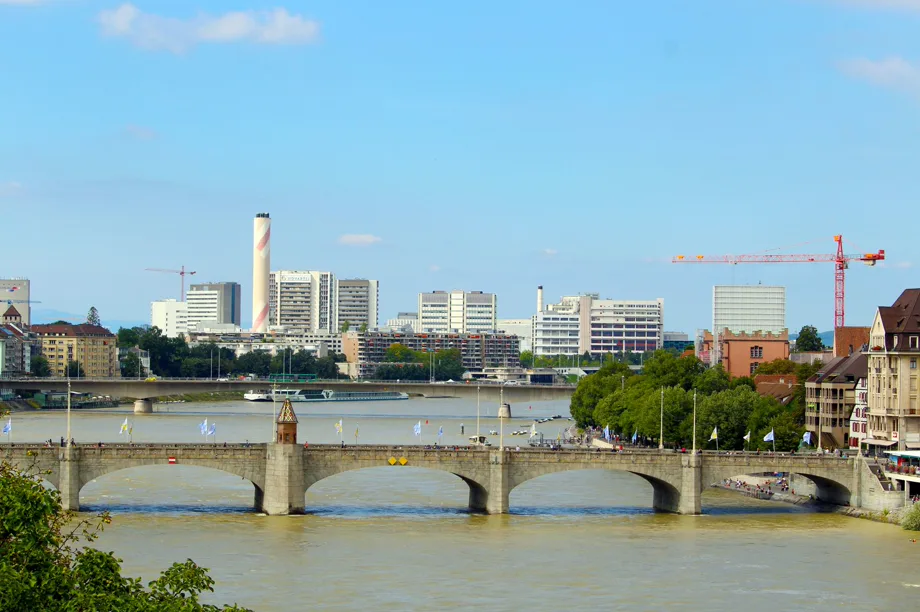
More than 414,000 cross-border workers were employed in Switzerland in the second quarter of 2026 according to the FSO: 242,000 from France, 92,000 from Italy, 67,000 from Germany, 9,000 from Austria. In Geneva they hold 118,000 jobs, in Ticino 79,000, in the two Basel cantons more than 62,000. For a recruiter in Geneva, Lugano, Basel, Neuchâtel or Kreuzlingen, the cross-border candidate is not a special case, it is the market.
This guide gives the steps in order: who can be a cross-border worker and which permit to request, who files and how long it takes, where the salary is taxed depending on the country of residence and what the employer must withhold, the telework thresholds not to cross, social insurance, unemployment. It also reads from the candidate’s side, to check that the employer does things right. Everything comes from official federal and cantonal pages, cited at the end.
In short: who is a cross-border worker, and what changes by country
A cross-border worker is someone who works in Switzerland and returns to their home abroad in principle every day, at least once a week. For EU and EFTA nationals, that is the only condition together with residence in a member state: border zones have been abolished, a cross-border worker can live anywhere in the EU and work anywhere in Switzerland (SEM). For third-country nationals the rule remains strict: permanent right of residence in a neighbouring country, domicile in the border zone for at least six months, job in the Swiss border zone.
The permit is the same everywhere, the G permit. What changes from one country to another is taxation and telework:
| Country of residence | Cross-border workers in Switzerland (Q2 2026) | Where the salary is taxed | Telework without tax change | Telework without social insurance change |
|---|---|---|---|---|
| France, outside Geneva | 242,082 for the whole of France | In France (1983 agreement), if the tax residence certificate is given to the employer | 40% of working time per year, from 1 January 2026 | 49.9% |
| France, job in Geneva | In Geneva, ordinary withholding tax; Geneva pays 3.5% of the payroll back to France | 40% | 49.9% | |
| Germany | 67,350 | In Germany; Switzerland withholds at most 4.5% of gross pay | Telework days do not cost the status | 49.9% |
| Italy | 91,609 | New cross-border workers: Swiss withholding at 80% of the ordinary rate, then taxed in Italy with a credit; old cross-border workers: in Switzerland only | 25% of working time | 49.9% |
| Austria | 8,942 | In Switzerland, ordinary withholding tax; Switzerland pays 12.5% back to Austria | No special regime | 49.9% |
The two telework thresholds are not the same thing: the tax one depends on the country, the social one is the same for the four neighbours since the multilateral agreement of 1 July 2023. Details and sources below.
The G permit: notification or authorisation, who files, how long it takes
Up to three months per calendar year: the notification procedure
No permit, a free online notification before the start of work, to the SEM or the cantonal authority depending on the canton. If the person has already worked three months in the year or holds a permit, an authorisation is needed instead.
Beyond three months: the G cross-border permit
It is issued for the length of the contract if it runs between three months and one year, for five years if it is one year or longer or open-ended. The employer’s name appears on the permit, but the holder has professional and geographic mobility throughout Switzerland.
Who files: it depends on the canton
In the canton of Vaud, the employer fills in form G1 online; the permit and the invoice, 70 francs, are sent to the employer, who is jointly liable. In Geneva, the worker files the online request for a job of more than three months; a change of employer is notified within 14 days and work can start as soon as the complete file is sent. Check your canton’s migration service page before signing the contract.
Third-country nationals: the employer applies
G permit issued on the employer’s request, after a labour market check: in Geneva, the OCIRT verifies the searches made on the Swiss and European markets, and the lead time is six to eight weeks. The initial permit is valid for one year, for the border zone of the issuing canton, and a new permit is needed to change job or occupation.
British, Croatian or other special cases
The United Kingdom left free movement: its nationals fall under third-country rules, except for acquired rights. Our guide to work permits for EU citizens covers the special cases.
Where the salary is taxed, and what the employer must withhold
France, in the cantons of Vaud, Valais, Neuchâtel, Jura, Bern, Basel-Stadt, Basel-Landschaft and Solothurn
The agreement of 11 April 1983 taxes the salary in France. The employer withholds no tax if the worker has handed over, before the first day of work and then every year before 1 January, the French tax residence certificate (form 2041-AS, then the prefilled 2041-ASK). Without it, withholding is mandatory. The worker must return home as a rule every day, at least four days a week full-time, and France pays the cantons 4.5% of the payroll. The employer forwards the certificate to the cantonal administration and keeps a list of its cross-border staff.
France, job in Geneva
Geneva is not in the 1983 agreement: the salary is taxed at source in Geneva, at the ordinary rate, withheld by the employer. Each year the canton pays the Ain and Haute-Savoie departments a compensation of 3.5% of the gross payroll of cross-border workers.
Germany
The worker is taxed in Germany. The Swiss employer withholds at most 4.5% of gross salary, on presentation of the residence certificate from the Finanzamt (Gre-1 for the first year, renewed afterwards). The status is lost if the person does not return home on more than 60 working days a year for professional reasons; telework days at home do not count as non-return days.
Italy
Since the 2020 agreement, in force on 17 July 2023 and applicable from 2024, two regimes. New cross-border workers, who entered the market after 17 July 2023, bear a Swiss withholding equal to 80% of the ordinary withholding rate, then are taxed in Italy with a credit for the Swiss tax. Old cross-border workers, active in Graubünden, Ticino or Valais between 31 December 2018 and 17 July 2023, remain taxed in Switzerland only, and the cantons pay 40% of the revenue to Italy until tax year 2033. In both cases, the tax cross-border worker lives in a municipality within 20 km of the border and returns home in principle every day.
Austria
No cross-border regime since 2007: the salary is subject to ordinary Swiss withholding tax, and the Confederation pays 12.5% of the revenue to Austria.
Telework of cross-border workers: the two thresholds to watch
Social insurance: 49.9% at most
Ordinary rule of EU Regulation 883/2004: from 25% of activity performed in the country of residence, the employee is insured there, and the Swiss employer must contribute to the foreign system, often more expensive. The multilateral agreement of 1 July 2023, signed by France, Germany, Austria, Italy and Liechtenstein, allows Swiss affiliation to be kept up to 49.9% of telework. Condition: the employer requests an A1 certificate from its AHV compensation fund via the ALPS platform, valid for three years at most, renewable, and retroactive for three months at most.
Tax, France: 40%
The amendment to the Franco-Swiss convention, in force since 24 July 2025 and applicable from 1 January 2026, taxes in the employer’s state up to 40% of telework per calendar year, with 40% of the taxes collected paid back to the state of residence. Up to ten days of temporary missions count in the quota. Above 40%, the ordinary rules of the convention apply from the first telework day. The cantons ask the employer to certify the telework rate.
Tax, Italy: 25%
The 2024 protocol, in force since 9 February 2026 and applicable retroactively from 1 January 2024, allows up to 25% of telework per calendar year without changing the tax regime or the cross-border status.
Tax, Germany and Austria
For Germany, telework days do not call the cross-border status into question, and the worker is taxed in Germany anyway; the Confederation recommends attending the Swiss workplace at least once a week. For Austria, no special regime exists.
The employment contract
The Confederation recommends stating explicitly the applicable labour law in the contract: without that clause, the application of Swiss law can be challenged if a significant share of the work is done abroad. Set the telework rate in writing and keep count of the days.
Social insurance, health insurance, unemployment: what differs from a resident
AHV, IV, APG, pension fund, accident: like a resident
As long as the cross-border worker works mainly in Switzerland, they are affiliated to Swiss insurance and the employer contributes normally. The cantonal minimum wage and collective agreements apply by place of work, not domicile: see our guide to the minimum wage by canton.
Health insurance: the right of option, within three months
Place-of-work principle: the cross-border worker must insure in Switzerland. Residents of France, Germany, Austria and Italy may ask to remain insured in their country, through a formal exemption request to the authority of the canton of work within three months of the start of the contract; a tacit option is not valid, and a worker who does not affiliate in time can be assigned to an insurer with a surcharge. Inform the new hire at signing.
Unemployment: benefits come from the country of residence
A cross-border worker who loses their job receives unemployment benefits from their state of residence, under its conditions, although they contributed in Switzerland. Switzerland reimburses that state three months of benefits, five if the person worked more than twelve of the last twenty-four months in Switzerland. The employer provides the international certificate requested by the foreign fund.
Job vacancy notification requirement
It applies to any position in an occupation where unemployment exceeds 5%, whether the intended candidate is a cross-border worker or not: see the 2026 list of occupations concerned.
Hiring a cross-border worker: the steps in order
- Check the status. EU/EFTA nationality and residence in the EU, or third country with six months of residence in the border zone. Return home every day or at least every week.
- Choose the procedure. Less than three months: online notification. More: G permit, filed by the employer or the employee depending on the canton, before the first day.
- Settle taxation before payroll. France outside Geneva: require the 2041-AS certificate before the start, otherwise withhold. Geneva, Austria, Italy: withholding tax, ordinary rate or 80% of it. Germany: Gre-1 certificate and 4.5% withholding.
- Report the hiring to the cantonal tax administration and the AHV fund.
- Set telework in writing, under 40% for France, 25% for Italy, and under 49.9% for all, with the A1 certificate via ALPS if the share exceeds 25%.
- Inform about health insurance: three months to exercise the right of option.
- State the applicable law in the contract and renew the certificates every year.
For the rest, a cross-border worker is hired like a resident: pay in line with the cantonal minimum, the sector’s collective agreement, and permitted interview questions. The job pages for Geneva, Basel, Basel-Landschaft, Neuchâtel, Jura, Schaffhausen, Thurgau and Ticino give the number of cross-border workers and the market of each canton.
The Licorn method: place of work and status are set before the first exchange
The profile states the domicile and the target place of work
A candidate from Haute-Savoie targeting Geneva, a Lombard targeting Ticino: the recruiter sees the canton sought, the workload, the telework wished and the expected salary. In our barometer, 82% of candidates targeting Geneva live in France.
The proposal comes with the conditions
Salary, location, workload, telework: the recruiter proposes, the candidate accepts or declines. Telework thresholds are discussed before signing, not after.
Skan scans the market on both sides of the border
Licorn’s agent suggests relevant openings to candidates, including cross-border workers in a job who keep listening. Our guide for recruiters explains the rest.
Frequently asked questions about hiring a cross-border worker
It depends on the canton and the nationality. For an EU/EFTA national, the employer files in the canton of Vaud (form G1) whereas in Geneva the employee does; for a third-country national, it is always the employer. Up to three months a year, a simple online notification is enough.
For an EU/EFTA national, work can often start as soon as the complete file is submitted, and the permit is valid five years for a contract of one year or more. For a third-country national, Geneva indicates six to eight weeks, the time for the labour market check.
In Geneva, yes, at the ordinary rate. In the cantons of the 1983 agreement (Vaud, Valais, Neuchâtel, Jura, Bern, Basel-Stadt, Basel-Landschaft, Solothurn), no, provided you received the 2041-AS tax residence certificate before the first day of work and every year; without it, withholding is mandatory.
Up to 49.9% without changing social insurance, with an A1 certificate from 25%. For tax, up to 40% for a resident of France from 2026 and 25% for a resident of Italy; beyond, the state of residence taxes the days worked at home.
No: they register in their country of residence and receive its benefits, although they contributed in Switzerland. Switzerland reimburses that state three to five months of benefits.
In principle yes, within three months. Residents of France, Germany, Austria and Italy may formally ask to remain insured at home within the same three months; after that deadline or without a formal request, Swiss insurance applies.
In short
Hiring a cross-border worker calls for four checks before signing: the status and the permit, which depends on the canton; taxation, which depends on the country and, for France, on the canton; telework, with a social threshold at 49.9% and tax thresholds at 40% for France and 25% for Italy; health insurance, to be settled within three months. The rest of the contract does not change.
The FSO figures are a reminder: in the border cantons, a recruiter who rules out cross-border workers rules out a decisive share of candidates. The job pages by canton show the scale, and Licorn profiles say from the outset where the candidate lives and where they want to work.
Sources
- Federal Statistical Office, Cross-border commuter statistics (STAF), Q2 2026: 414,262 cross-border workers, by country of residence and canton of work (in French)
- State Secretariat for Migration, factsheet Cross-border commuters: EU/EFTA conditions, permit validity, unemployment, health insurance (in French)
- SEM, Permit G EU/EFTA (cross-border commuter permit): weekly return, validity, notification procedure, mobility
- SEM, Permit G for third-country nationals: border zone, six months of residence, one-year validity
- State of Geneva, Applying for a cross-border work permit: who files, notification procedure, third countries, lead times, health insurance (in French)
- State of Vaud, Cross-border permits on card: form G1, employer’s role, 70 francs (in French)
- Canton of Neuchâtel, Cross-border workers: 1983 agreement, 2041-AS/ASK certificate, 4.5% compensation, 40% telework, employer duties (in French)
- State of Vaud, Persons taxed at source: cross-border workers living in France, residence certificate before the first day, withholding otherwise (in French)
- State of Geneva, Payment to France of the financial compensation for cross-border workers: 3.5% of payroll (in French)
- State Secretariat for International Finance, CH-FR amendment: in force 24 July 2025, applicable from 2026, 40% telework, 40% paid back (in French)
- Finanzamt Baden-Württemberg, Grenzgänger: art. 15a of the convention, 4.5% withholding, residence certificate, 60 non-return days, telework (in German)
- Federal Tax Administration, New Switzerland-Italy agreement on the taxation of cross-border workers, factsheet and FAQ: 80%, old cross-border workers, 40% until 2033, 20 km zone (in Italian)
- Federal Council, Switzerland-Italy protocol on cross-border telework: in force 9 February 2026, applicable from 2024, 25% (in Italian)
- Federal Tax Administration, Taxation at source, as of 1 January 2025: cross-border workers from Austria, 12.5% paid back (in German)
- Federal Social Insurance Office, Cross-border telework: multilateral agreement of 1 July 2023, 49.9%, A1 certificate via ALPS (in French)
- Federal SME portal, Telework of cross-border workers: 25% threshold, tax rules by country, law applicable to the contract (in French)
- Federal Office of Public Health, Health insurance of cross-border workers: place-of-work principle, right of option, three-month deadline (in French)
- SECO, arbeit.swiss, Regulation (EC) 883/2004: unemployment of cross-border workers in the state of residence, reimbursement of three to five months
On the same topic

Minimum wage in Switzerland in 2026: the amounts canton by canton, the exceptions and the sanctions for every job

Swiss work permits for EU citizens: the B, L, G and C permits explained